

Home Bias in SEO & Regional Competitor Analyses
The Impact of “Home Bias” on Online Marketing

Despite global connectivity, service providers receive a disproportionately large number of inquiries from their respective home regions. In online marketing, too, this is referred to as “home bias, ” even though the term actually originates from capital market theory.
Transaction costs are an objective factor in this “home-market bias. “ As an SEO freelancer based in Friedrichshain, for example, I could very easily be available to meet with a client from Mitte in person.
Furthermore, softer factors such as local pride should not be underestimated. On a personal level, people share a common bond through their city or region, providing a constant source of topics to gently break the ice in a business conversation.
The Importance of Local SEO
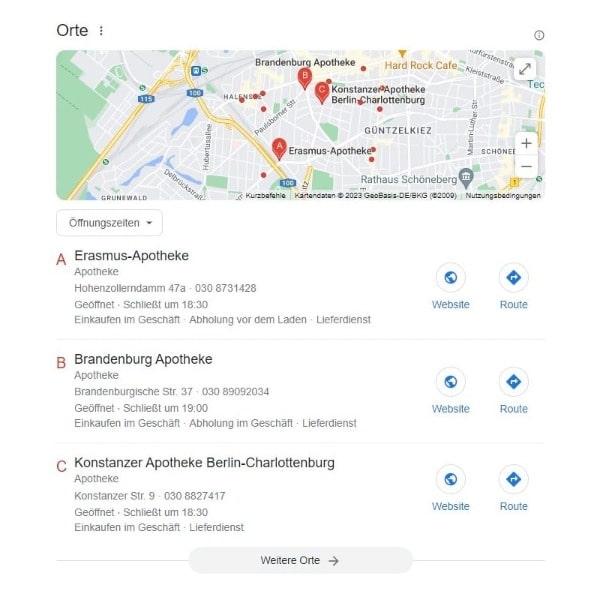
All in all, this results in a local intent that is often only implicit but ultimately very pronounced in Google search queries. According to Google, a whopping 46% of all search queries have this component. You can usually tell this just by looking at the map directly on the search results page.
That’s why, for almost all service providers, competition in the local market is the most critical factor—even when it comes to SEO. Or to put it simply: Local SEO is arguably the most important subdiscipline of search engine optimization for lead generation right now.
Regional SEO Competitor Analyses
Cave Canem – Tools & Agencies
Competitor analyses are a goldmine for the SEO industry. Large software providers in particular, such as SemRush and Sistrix, can use very simple calculations to highlight any “gaps” between domains or subpages.
These automatically generated competitive analyses are then made available to paying users of the tool. For SEO agencies, this is a goldmine.
Even student workers can take screenshots of these competitive analyses and incorporate them into really polished presentations. For a hefty fee, SEO managers with a bit of experience then present the whole thing to clients who are usually clueless.
In specific individual cases, however, these off-the-shelf solutions are usually not suitable at all. There are simply two fundamental problems:
- The differences between competitors that are relevant to Google are specific to each case and not universally applicable.
- The differences between companies and their competitors that are relevant to a given business are specific to each company and not universally applicable.
Selection of Relevant Keywords & Topics
As a general rule for any SEO competitive analysis, the scope of the analysis should be narrowed down to the relevant keywords and topics. If you simply use a tool to compare all the ranking keywords of two domains, a large portion of the results will most likely be irrelevant.
Another cardinal mistake is focusing on high search volumes. Especially when it comes to lead generation for service providers, highly granular landing pages are particularly effective at driving high-converting, relevant traffic.
Analysis of Search Results Pages
Sneaky Little SERP Features
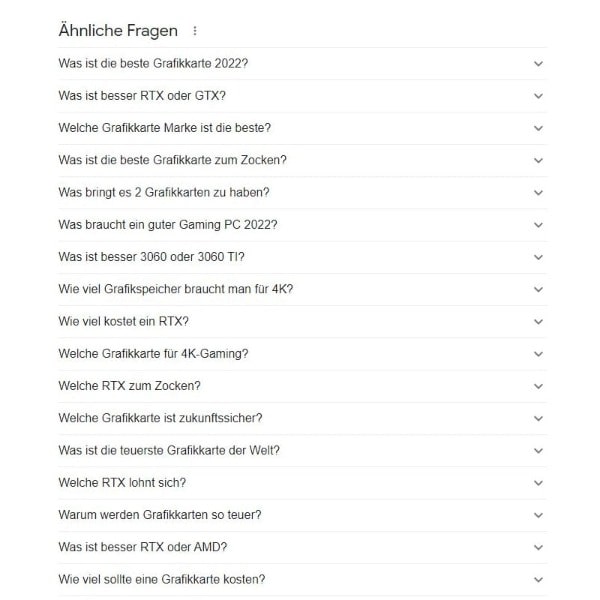
Google itself is the biggest competitor for organic clicks. Numerous SERP features have long been driving down click-through rates, and with the planned shift to AI-driven SGE, it will become even more important to analyze the results.
Analysis of SERP features is therefore essential for SEO competitive analysis. Although somewhat outdated by now, the classification into the three (main) search types remains fundamental:
- For Information Purposes
- Navigational
- Transactional
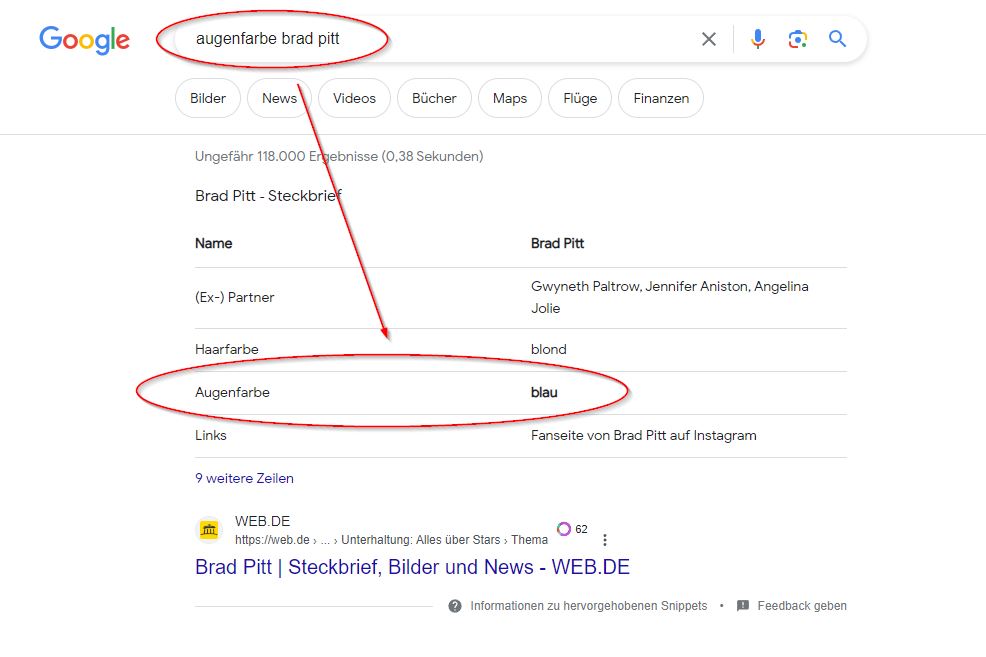
However, Google has long since differentiated search types much more extensively, as evidenced by the distinction between “Knowledge” and “Simple Knowledge.” The latter in particular—such as a question about Brad Pitt’s eye color—is usually answered in the SERPs and thus constitutes a zero-click search.
Relevance of Content Types
In addition, it is important to know which types of content perform particularly well for specific search queries. For example, some SERPs feature primarily long-form text, while others include many images or videos.

Analysis of Local Rankings
Another key step is analyzing visibility within the region as opposed to visibility at the national level. I have therefore already dedicated a separate post to such local rankings. The graphics from the California-based agencies Sterlingsky and Whitespark illustrate this topic very clearly:


Request Appointment
- Get in Touch: You can contact me by phone, email, or through the form.
- Discuss Project: I will first take a thorough look at the project, and we will then discuss the technical and business situation in detail.
- Written offer: Based on this meeting, I prepare a written offer with a detailed list of the planned measures.



